
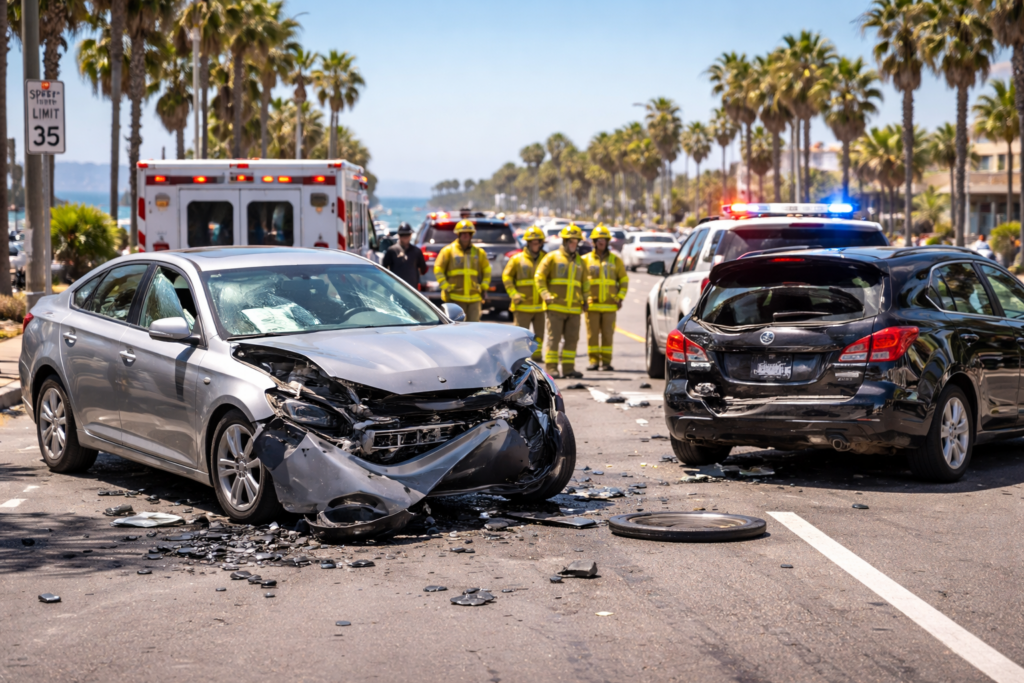
Liability in car accidents is a key component of personal injury cases, especially in California, where comparative negligence plays a crucial role in determining fault. Understanding how liability is assigned can help you navigate the aftermath of a crash, ensuring that your rights are protected. In this guide, we will discuss how liability is determined, including the role of negligence, shared fault, and how the law impacts your compensation.
How Fault Is Determined in California Car Accidents
In California, liability is typically based on the concept of negligence. Negligence refers to a driver failing to exercise reasonable care, which leads to an accident. To determine who is at fault, various factors such as the driving behavior, road conditions, and the actions of both parties involved are considered.
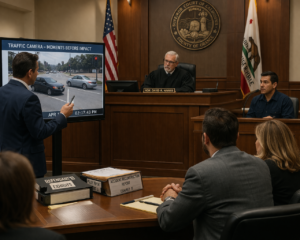
One of the primary ways fault is established is through the evidence presented by both parties, including police reports, witness statements, and traffic camera footage. For instance, if a driver runs a red light and causes a collision, that driver will likely be considered at fault. However, it’s important to note that California follows a comparative negligence rule, which means that more than one party can be at fault.
Common Scenarios and How Liability Is Assigned
Let’s look at a few common types of accidents and how liability is usually assigned in California:
Rear-End Collisions
In rear-end collisions, the driver behind is often at fault, especially if they were tailgating or distracted. However, if the lead vehicle made an abrupt stop or did not have working brake lights, liability might be shared.
Read related articles: What to Do After a Car Accident in California, How Car Accident Lawyers Can Help
Intersection Accidents
At intersections, liability depends on who had the right of way. If one driver runs a red light or makes an illegal turn, they may be considered at fault. In cases where both drivers contribute to the accident, California’s comparative negligence rule will come into play.
Multi-Vehicle Crashes
In multi-vehicle accidents, determining liability can be complex. Investigators will look at evidence from all involved drivers, and each party may be assigned a percentage of fault.
The Role of Evidence in Establishing Liability
To prove who is at fault in a car accident, evidence plays a crucial role. Some of the most important forms of evidence include:
- Police Reports: These documents often contain details about the crash and can indicate who was at fault.
- Witness Statements: Eyewitness accounts of the accident can provide insight into the actions of both parties.
- Traffic Camera Footage: Traffic cameras can capture the moments leading up to and during an accident, offering vital proof of who was at fault.
Read source article: How Auto Insurance Handles Liability
California’s Comparative Negligence Rule
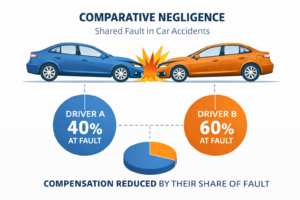
California follows a pure comparative negligence rule. This means that even if you are partially at fault for an accident, you can still recover compensation. However, the amount of compensation you receive will be reduced by your percentage of fault. For example, if you are found to be 20% at fault for an accident, your compensation will be reduced by 20%.
Example of Comparative Negligence:
- Driver A is 40% at fault.
- Driver B is 60% at fault.
In this case, both parties can still claim compensation, but each will receive a reduced amount based on their level of fault.
How Liability Affects Your Compensation
Your level of fault in a car accident can significantly impact the compensation you receive. California’s comparative negligence rule ensures that even if you are partially at fault, you are not barred from recovering damages. However, the more at fault you are, the less compensation you will receive.
For instance, if the court determines that you are 50% at fault for the accident, your compensation will be halved. The total amount you can claim is directly tied to how much of the fault you share.
Read source article: Accident Claim Process
How a Car Accident Attorney Can Help
Determining liability in car accidents can be complex, especially when shared fault is involved. A skilled Car Accident Lawyer can help ensure that all evidence is considered and that your rights are protected throughout the process. Lawyers can help negotiate with insurance companies and make sure that you are fairly compensated for your injuries and damages.
What You Can Do After an Accident
If you’ve been involved in a car accident, taking the right steps immediately after can help protect your case. Here’s what you should do:
- Seek Medical Attention – Even if you feel fine, it’s important to get checked for injuries.
- Gather Evidence – Take photos, collect witness statements, and get a police report.
- Consult a Car Accident Lawyer – Having legal guidance ensures you understand your rights and options.