
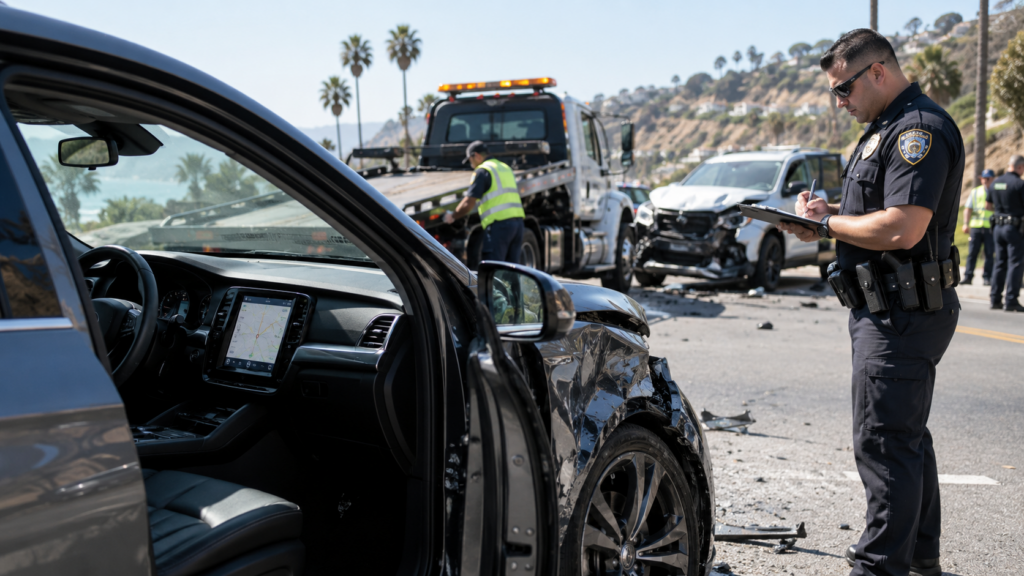
Modern vehicles do far more than transport people from one destination to another. Many newer cars contain electronic systems that can record crash-related information, communicate with manufacturer services, store diagnostic information, and provide connected features through mobile apps. After a serious collision, some of this information may become relevant when drivers, insurers, investigators, and attorneys try to understand what happened.
In California, the subject has become particularly important in 2026. New connected-vehicle requirements reached another implementation stage on July 1, while state regulators have also focused attention on how automakers collect, use, and share driving and location information.
However, not all vehicle data is the same. An event data recorder (EDR), sometimes called a vehicle “black box,” generally records technical information around a crash. Connected-vehicle systems, meanwhile, may involve remote services, apps, location access, and other information. Understanding that distinction is important when considering how digital evidence may relate to a California car accident claim.
What Is an Event Data Recorder?
An event data recorder is an electronic device designed to record certain technical information associated with a vehicle crash. The National Highway Traffic Safety Administration explains that EDRs can capture information for a brief period before, during, and after an accident.
Depending on the vehicle and system, that information may include vehicle speed, braking, acceleration, seat belt use, airbag deployment, and other vehicle dynamics. EDRs generally do not function like continuous video cameras or traditional GPS trip-history systems.
This distinction matters because a dashcam recording may visually show what happened, while an EDR can potentially provide technical information about what the vehicle was doing immediately before or during impact.
Readers interested in video-based crash evidence can also review our article on how AI dashcams are changing California car accident claims.
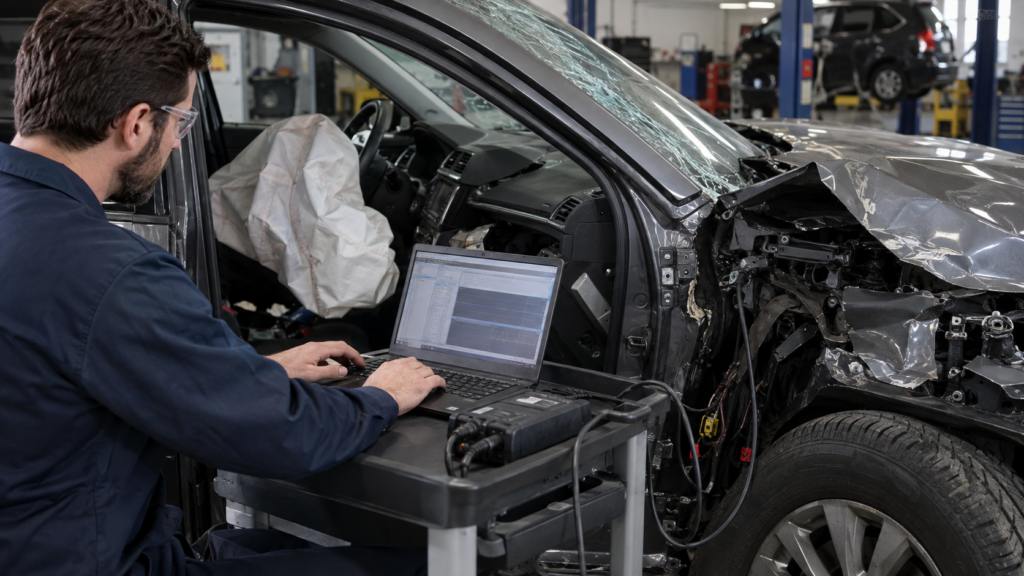
How Black-Box Data May Help Investigate a Crash
Car accident investigations often involve conflicting accounts. One driver may say the other vehicle was speeding. Another may claim they applied the brakes before impact. Witnesses may have seen only part of the collision.
When available, EDR information can potentially provide another source of evidence. Investigators may compare recorded data with physical vehicle damage, roadway evidence, photographs, witness statements, police reports, and video footage.
For example, data showing vehicle speed or brake application may help an accident reconstruction professional evaluate whether the electronic information is consistent with other evidence from the crash scene.
It is important not to treat black-box information as an automatic answer to every liability question. NHTSA notes that EDR information should be considered alongside other sources of crash evidence rather than in isolation.
Our Accident Evidence section covers additional forms of documentation that may become relevant after a collision.
California Law Addresses Access to EDR Information
California specifically regulates certain vehicle recording devices. California Vehicle Code Section 9951 addresses event data recorders and describes several types of information that a recording device may capture, including vehicle speed, steering performance, braking performance, seat belt status, and certain accident information.
The law also places restrictions on retrieving recorded information. Depending on the circumstances, access may involve the registered owner’s consent, a court order, or another legally recognized exception.
That means the existence of an EDR does not necessarily give another person unrestricted access to its contents. Ownership, authorization, litigation procedures, and the circumstances of the accident can all matter.
Federal law also provides privacy protections involving EDR information. The federal Driver Privacy Act generally treats EDR data as belonging to the vehicle owner or, for a leased vehicle, the lessee, while recognizing certain exceptions for authorized access.
Connected-Car Data Is Different From EDR Data
Many modern vehicles also offer connected services that communicate with a manufacturer or another service through wireless technology. These features may allow someone to locate the vehicle, remotely lock or unlock doors, check charging status, receive maintenance information, or interact with the vehicle through a smartphone app.
California’s connected-vehicle laws define connected vehicle services separately from traditional crash recording devices. A California DMV industry notice on connected vehicle service access explains that certain requirements began in 2025, with another important provision taking effect July 1, 2026.
For qualifying vehicles manufactured before January 1, 2028 that have connected vehicle location access and the necessary software-update capability, manufacturers must provide an in-vehicle mechanism allowing a driver to immediately disable connected vehicle location access.
This rule concerns remote location access and connected services. It should not be confused with the EDR rules governing technical crash information.
Why Vehicle-Data Privacy Is a Major Issue in 2026
Vehicle data has attracted increasing regulatory attention because today’s connected cars may collect substantially more information than older vehicles.
In May 2026, the California Attorney General announced a settlement involving General Motors concerning allegations that the company improperly sold location and driving-behavior information involving hundreds of thousands of Californians to data brokers.
The enforcement action illustrates why drivers should understand what information their vehicles collect and how connected services use that data. It does not mean every automaker collects or shares information in the same way.
The California Privacy Protection Agency has also examined the privacy practices of connected vehicles, noting that modern cars may contain cameras, sensors, smartphone integrations, location functions, and other technology capable of gathering substantial information.
Could Connected-Car Data Affect Liability?
Potentially, but the usefulness of any data depends on what was actually recorded, whether it can be lawfully obtained, and how it relates to the collision.
Suppose two motorists disagree about vehicle speed before an intersection crash. Available EDR information may potentially help establish the vehicle’s recorded speed or braking activity shortly before impact. In another case, onboard data may help determine whether a safety system activated.
That evidence would usually need to be evaluated together with photographs, roadway measurements, vehicle damage, witness testimony, surveillance footage, and other documentation.
California’s comparative negligence rules also mean that more than one party may share responsibility for a collision. Digital evidence may therefore be relevant not only to whether someone was negligent, but also to how responsibility is allocated among the people involved.
For additional information about shared responsibility, visit our Car Accident Liability articles.
Vehicle Data Can Have Important Limitations
Electronic evidence can sound definitive, but it has limitations. Different manufacturers and vehicle models may record different information. Some systems retain data only when particular conditions or thresholds are met.
Investigators may also need specialized equipment and expertise to retrieve and interpret data correctly. An isolated number may be misleading without knowing what it represents, when it was recorded, and how the vehicle’s system operates.
For these reasons, EDR information generally works best when compared with independent evidence from the accident scene.
The NHTSA vehicle safety research program maintains extensive information about crash research, vehicle safety technologies, and event data recorders.
Why Preserving Digital Evidence Quickly Can Matter
After a collision, physical and digital evidence can change or disappear. A damaged vehicle may be repaired, totaled, sold, or transferred to a salvage facility. Cloud-connected information may be retained according to provider-specific policies, while some onboard data can potentially change through later vehicle operation or system events.
Drivers involved in significant accidents should avoid altering potentially relevant electronic systems without considering whether important evidence needs to be preserved.
Photographs of the dashboard, warning messages, infotainment display, vehicle damage, and accident scene may also help document what the vehicle showed immediately after the collision.
The same principle applies to dashcam recordings. If video exists, saving the original recording can help prevent it from being automatically overwritten.
Insurance Companies May Review Digital Evidence
Insurance investigations increasingly involve digital information, but the availability and legal significance of vehicle data varies considerably from case to case.
An insurer may consider electronic information alongside a police report, statements from the drivers, repair estimates, photographs, medical records, and witness accounts. When liability is disputed, technical crash information may become more significant.
California consumers also have privacy rights involving certain personal information collected by businesses. The California Attorney General’s CCPA resource explains rights relating to knowing, deleting, and limiting certain uses or sharing of personal information, subject to applicable exceptions.
Drivers should not assume that every piece of vehicle information is automatically available to an insurer or opposing party simply because the vehicle is connected.
What Drivers Should Document After a Crash
After addressing immediate medical and safety concerns, accident documentation can become important. When it is safe to do so, photograph the vehicles, license plates, surrounding roadway, traffic controls, debris, skid marks, and visible damage.
It may also be useful to photograph dashboard warning lights or system messages that appear after the collision. Preserve original dashcam recordings, obtain witness contact details, and request applicable police-report information.
If the accident involves a newer connected vehicle, note the make, model, trim, and model year. These details may help determine what electronic systems the vehicle contains and what information could potentially exist.
Our Car Accident Law guides provide additional information about California claims, insurance issues, evidence, and liability.
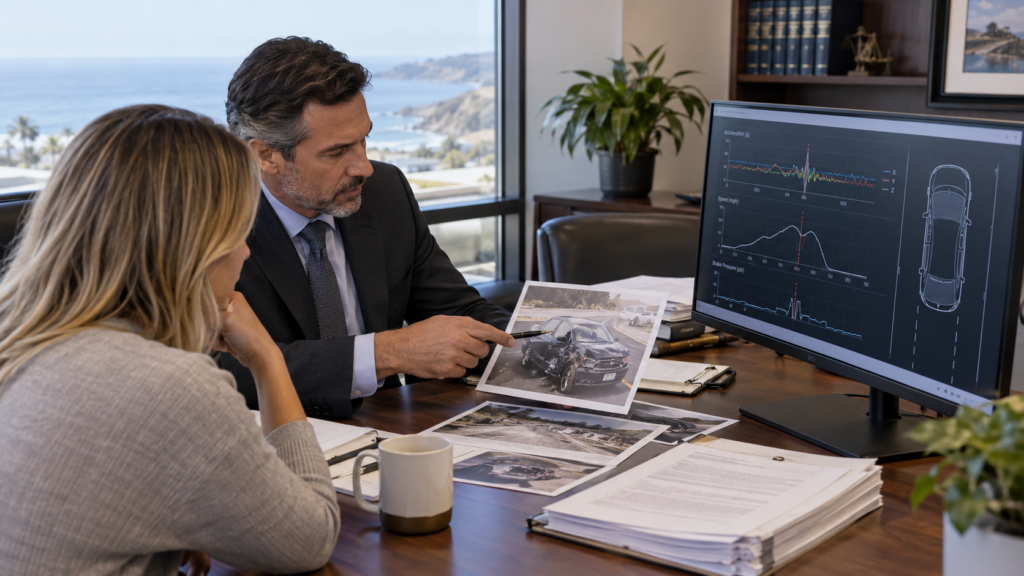
How Attorneys and Accident Experts May Use Vehicle Data
When a serious accident involves disputed liability, attorneys may work with qualified accident reconstruction professionals or other technical experts to determine whether vehicle data exists and how it should be interpreted.
A reconstruction analysis may compare EDR information with damage patterns, roadway measurements, photographs, surveillance footage, and statements from the people involved.
Depending on the dispute, legal procedures may also be necessary to obtain or preserve particular records. Because privacy and ownership rules can apply, obtaining vehicle information is not always as simple as connecting a computer to the car.
Connected Vehicles Are Changing Accident Investigations
Cars are becoming increasingly sophisticated digital systems. Event data recorders, cameras, driver-assistance features, connected apps, sensors, and remote vehicle services can produce information that did not exist in traditional accident investigations decades ago.
For California drivers, that creates both opportunities and concerns. Electronic information may help clarify disputed facts, but the collection and use of vehicle data also raises significant privacy questions.
The important point is to distinguish between different types of information. A crash-focused EDR is not the same thing as connected location tracking, an AI dashcam, or a manufacturer’s remote-service platform. Each may involve different technical features, retention practices, privacy rules, and evidentiary considerations.
Final Thoughts
Connected-car technology is likely to play a growing role in California accident investigations. When available, digital information can potentially help establish what a vehicle was doing before a collision, but it should generally be evaluated alongside the complete body of evidence.
California’s 2026 connected-vehicle developments also show that privacy is becoming an important part of the discussion. Drivers should understand the technology in their vehicles, preserve relevant evidence after a serious accident, and avoid assuming that all digital information works the same way.
For more accident-related guidance, explore our latest Newport Beach car accident articles.