
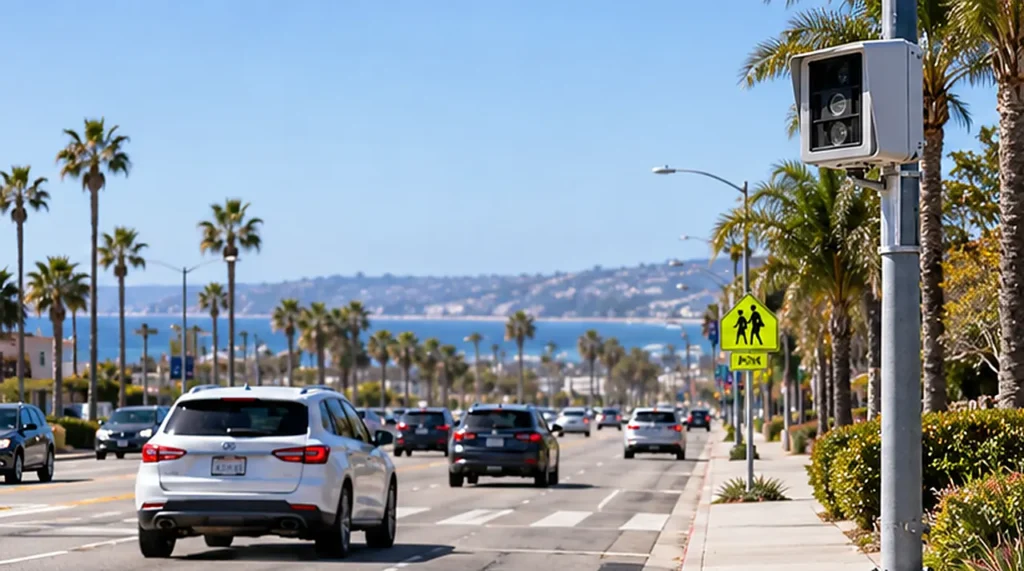
California speed cameras are making headlines in 2026 as more Southern California cities begin automated enforcement. Long Beach activated its speed safety system on October 7, and Los Angeles began activating its first cameras on October 26. The programs aim to slow dangerous drivers on streets where high speeds can turn an ordinary collision into a life-changing event.
For injured drivers and passengers, the news raises a separate question: Can speed camera evidence help establish fault after a car accident? The answer is more complicated than simply requesting a video. California’s pilot cameras are designed to document specific speeding violations, and state law imposes significant privacy and access restrictions. Understanding what these devices record can help accident victims focus on evidence that may actually be available.
Why California Speed Cameras Are Trending in October 2026
On October 26, 2026, Los Angeles began activating speed cameras under its Speed Safety System pilot. According to the City of Los Angeles announcement, the cameras identify vehicles traveling at least 11 miles per hour over the posted limit. Each newly activated camera has an initial 60-day warning period before monetary citations begin.
Earlier in October, Long Beach announced that its system was active, with a citywide warning period beginning October 7. The Long Beach speed safety program focuses on high-injury streets and other locations selected using safety information. Both rollouts reflect a broader state pilot originally authorized through Assembly Bill 645.
These changes are relevant to Newport Beach residents who travel throughout Orange County and greater Southern California. However, the AB 645 pilot authorization names six jurisdictions: Los Angeles, Long Beach, San Francisco, Oakland, San Jose, and Glendale. Newport Beach is not one of those six pilot cities. Drivers should not assume that a camera used elsewhere is operating on a Newport Beach street.
How Does an Automated Speed Camera Work?
A speed safety system uses technology such as radar or laser to detect vehicles exceeding a set speed threshold. When a qualifying violation occurs, the system records limited information needed for enforcement, including a photograph of the vehicle’s rear license plate and the relevant time and location.
The Centers for Disease Control and Prevention explains that automated cameras can supplement traditional speed enforcement, particularly where traffic stops may be difficult or unsafe. Their main purpose is prevention: encouraging motorists to slow down before a collision occurs.
California’s pilot speed cameras should not be confused with red-light cameras, commercial security cameras, or dashcams. They generally do not record continuous video of every vehicle passing through an intersection. That distinction matters when someone seeks images from the minutes before or after a crash.
What Do California’s Speed Camera Rules Allow?
The state’s pilot program includes guardrails on camera placement, warning notices, the type of image recorded, and use of the information. Under California Vehicle Code Section 22425, designated local programs photograph the rear of a speeding vehicle rather than the driver’s face. Facial-recognition technology is prohibited in conjunction with these systems.
The law also requires an initial warning period and provides for a warning for a vehicle’s first violation within a jurisdiction when the recorded speed is 11 to 15 mph above the limit. After the applicable warning rules, speeding violations may result in civil monetary penalties. They are different from ordinary moving-violation convictions and do not automatically add points to a California driving record.
Can Speed Camera Photos Prove Who Caused a Collision?
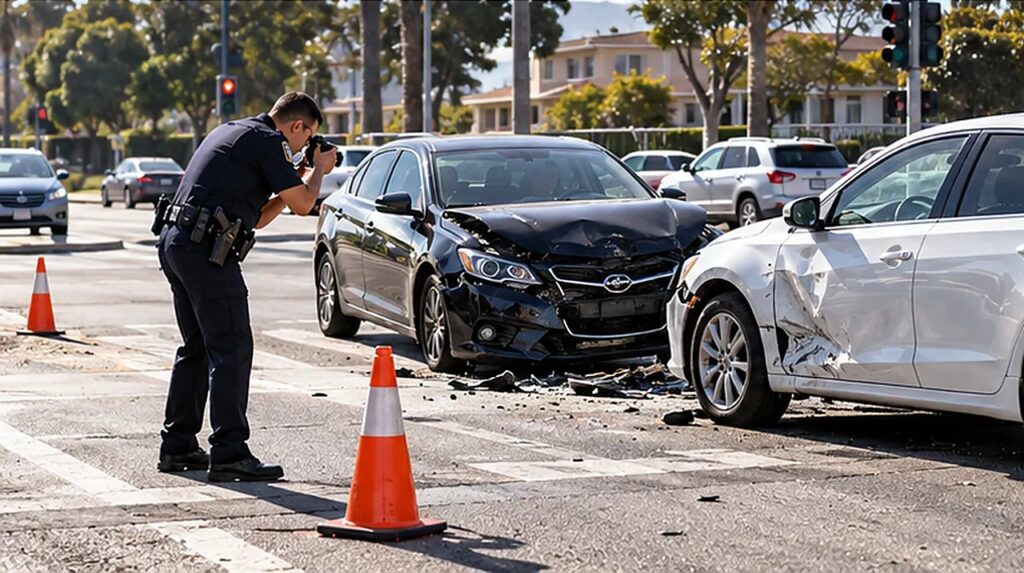
Not on their own. A camera might establish that a particular vehicle triggered a speed threshold at a specific location and time, but it does not necessarily identify the driver or show what happened during a nearby collision. A photograph of a license plate is different from a complete recording of an accident.
For instance, a crash may involve several vehicles, a turning maneuver, a blocked sightline, or a pedestrian entering a crosswalk. Even verified speeding information may need to be compared with witness statements, road markings, traffic-signal timing, physical damage, and other evidence before anyone can determine how the collision occurred.
California also applies comparative negligence principles. If multiple drivers contributed to an accident, responsibility may be divided according to their respective conduct. Speeding can be an important factor without being the only factor.
Are Camera Records Available to Accident Victims?
Access is a major limitation. Under California’s pilot law, photographs and administrative records from speed safety systems are generally confidential and may be used for narrowly defined program purposes. The statute recognizes certain circumstances involving a court order or subpoena in an individual proceeding, but it does not create an open public library of crash footage.
There are also restrictions on how long some records can be retained. Images that do not result in a violation notice must generally be destroyed within five business days. That means an injured person should not assume a nearby camera still has a photograph or that it captured anything relevant in the first place.
Where preservation or lawful disclosure might be appropriate, the circumstances should be evaluated promptly. See our Accident Evidence articles for other ways to document a collision without relying exclusively on automated enforcement records.
Why Excessive Speed Matters Even Without a Camera
Speed affects both the likelihood of a crash and the injuries that may follow. The National Highway Traffic Safety Administration reports that speeding contributed to 29% of U.S. traffic fatalities in 2024. It also explains that traveling faster increases stopping distance and the potential severity of a collision.
The NHTSA guide to speed safety camera enforcement discusses the technology as one tool within a broader strategy that also includes roadway design, traffic calming, and conventional police enforcement.
What Other Evidence Can Help Show That a Driver Was Speeding?
When no relevant camera record exists, an investigation can still examine vehicle damage, braking evidence, witness observations, dashcam recordings, and available electronic data. Some vehicles have event data recorders that may preserve limited technical information from the moments surrounding a significant crash.
Nearby businesses or properties may also have surveillance systems. Unlike the restricted speed-camera pilot, those systems may record continuous footage, although access and retention vary. Promptly identifying potential sources can be important because video may be overwritten.
For a closer look at digital accident evidence, read our article on AI dashcams and California accident claims. It explains how vehicle video can provide context that a single enforcement photograph may not show.
What Should Newport Beach Drivers Do After a Suspected Speeding Crash?
First, move to a safe location if possible and obtain medical help when needed. Report the collision as appropriate, then document the vehicles, surrounding roadway, traffic signs, skid marks, debris, and any visible injuries without putting yourself in danger.
Ask witnesses for their contact information. Save original dashcam files and photographs. Note the time, street, intersection, and any nearby commercial cameras. If someone says a speed camera was present, record its location without assuming it stores publicly accessible footage.
Keep medical records, repair estimates, and communications related to the collision. Our Newport Beach post-accident guide explains additional practical steps for motorists and passengers.
Could a Speeding Citation Decide an Insurance Claim?
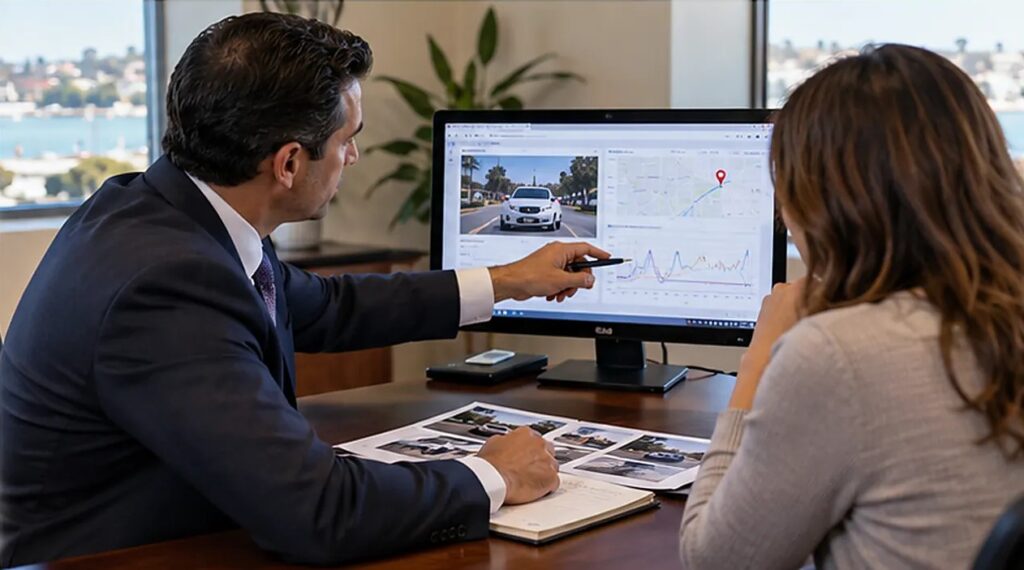
A citation may become relevant, but it does not automatically settle a dispute over negligence, injury causation, or damages. An insurer may still examine whether the allegedly speeding vehicle was involved, who was driving, the sequence of events, and whether other actions contributed to the crash.
For broader context about how the state evaluates fault, read our guide to car accident liability in California.
What the 2026 Rollout Means for Newport Beach Residents
For now, Los Angeles and Long Beach have different activation dates, and warning periods apply. The programs should not be portrayed as a statewide network of cameras recording every accident. Newport Beach drivers should instead focus on obeying posted limits, adjusting speed for conditions, and preserving independent evidence if a collision occurs.
Our article on California’s 2026 traffic law changes provides more background on the broader road-safety landscape.
Final Thoughts
California speed cameras are becoming a visible part of traffic enforcement in 2026, but their purpose and legal restrictions are specific. They can identify certain speeding violations; they are not substitutes for a complete crash investigation. If you were injured in a collision involving a suspected speeding driver, obtaining medical care and preserving the evidence that actually exists are more reliable starting points than assuming camera footage will be available.
For more information about injury claims, explore our California Car Accident Law and Liability and Fault Rules resources.